Falafel bowls with hummus are the kind of meal you look forward to all day. They’re crisp, creamy, colorful, and packed with flavor. Best of all, they’re easy to customize with whatever vegetables and grains you like.
Make a big batch of falafel, whisk together a quick tahini sauce, and you’ve got lunches or dinners sorted for days. This is a weeknight-friendly recipe that still feels special.
Why This Recipe Works

Falafel bowls work because they balance texture and flavor in every bite. You get crispy falafel, creamy hummus, and fresh crunch from simple veggies and herbs.
The tahini-lemon dressing ties everything together with a bright, nutty finish. Using canned chickpeas speeds things up, while a few pantry spices make it taste like you cooked all day. It’s filling, high in plant protein, and satisfying without feeling heavy.
What You’ll Need
- For the Falafel:
- 2 cans (15 oz each) chickpeas, drained and patted dry
- 1 small onion, roughly chopped
- 3 cloves garlic
- 1 cup fresh parsley leaves (packed)
- 1/2 cup fresh cilantro leaves (packed, optional but great)
- 1 teaspoon ground cumin
- 1 teaspoon ground coriander
- 1/2 teaspoon smoked paprika (optional)
- 1 teaspoon baking powder
- 1/2–3/4 cup breadcrumbs or oat flour (as needed for texture)
- 1 teaspoon kosher salt, plus more to taste
- Black pepper to taste
- Olive oil for pan-frying or baking
- For the Hummus:
- 1 can (15 oz) chickpeas, drained
- 1/4 cup tahini
- 2 tablespoons lemon juice (more to taste)
- 1 small garlic clove
- 2–4 tablespoons cold water
- 2 tablespoons olive oil
- 1/2 teaspoon kosher salt
- For the Tahini Dressing:
- 1/4 cup tahini
- 2 tablespoons lemon juice
- 1 tablespoon maple syrup or honey
- 1 small garlic clove, grated
- 2–4 tablespoons warm water to thin
- Pinch of salt
- Bowl Components:
- 2 cups cooked grains (rice, quinoa, bulgur, or couscous)
- 1–2 cups chopped cucumbers
- 1–2 cups cherry tomatoes, halved
- 1/2 small red onion, thinly sliced
- 1 cup shredded carrots or thinly sliced radishes
- 1/2 cup chopped fresh parsley or mint
- Lemon wedges
- Optional extras: olives, pickled red onions, feta (if not vegan), pita chips
Instructions

- Prep the grains. Cook your chosen grain according to package directions.
Fluff and set aside. A simple drizzle of olive oil and pinch of salt keeps them tasty.
- Make the hummus. In a food processor, blend chickpeas, tahini, lemon juice, garlic, salt, and olive oil. Add cold water 1 tablespoon at a time until smooth and creamy.
Adjust lemon and salt to taste.
- Pulse the falafel mixture. To the same processor (no need to wash fully), add drained chickpeas, onion, garlic, parsley, cilantro, cumin, coriander, paprika, salt, and pepper. Pulse until finely chopped but not pureed; you want a coarse, sticky mixture.
- Add binder. Sprinkle in baking powder and 1/2 cup breadcrumbs or oat flour. Pulse to combine.
If the mix still feels wet, add more crumbs 1 tablespoon at a time until it holds together when pressed.
- Shape the falafel. Scoop and roll into walnut-sized balls or small patties. Place on a tray and chill 15–20 minutes to firm up. This helps them cook without falling apart.
- Cook the falafel.
- Pan-fry: Heat a slick of olive oil in a nonstick skillet over medium heat.
Cook falafel 3–4 minutes per side until deeply golden and crisp.
- Bake: Brush a sheet pan with oil. Arrange falafel, drizzle lightly, and bake at 425°F (220°C) for 18–22 minutes, flipping halfway.
- Air-fry: Spray basket, air-fry at 380°F (193°C) for 10–12 minutes, shaking once.
- Pan-fry: Heat a slick of olive oil in a nonstick skillet over medium heat.
- Whisk the tahini dressing. In a small bowl, whisk tahini, lemon, maple syrup, garlic, salt, and water until smooth and pourable. It should coat a spoon but still drizzle.
- Prep the veggies. Chop cucumbers and tomatoes, slice onion, and shred carrots.
Toss with a pinch of salt and a squeeze of lemon for quick brightness.
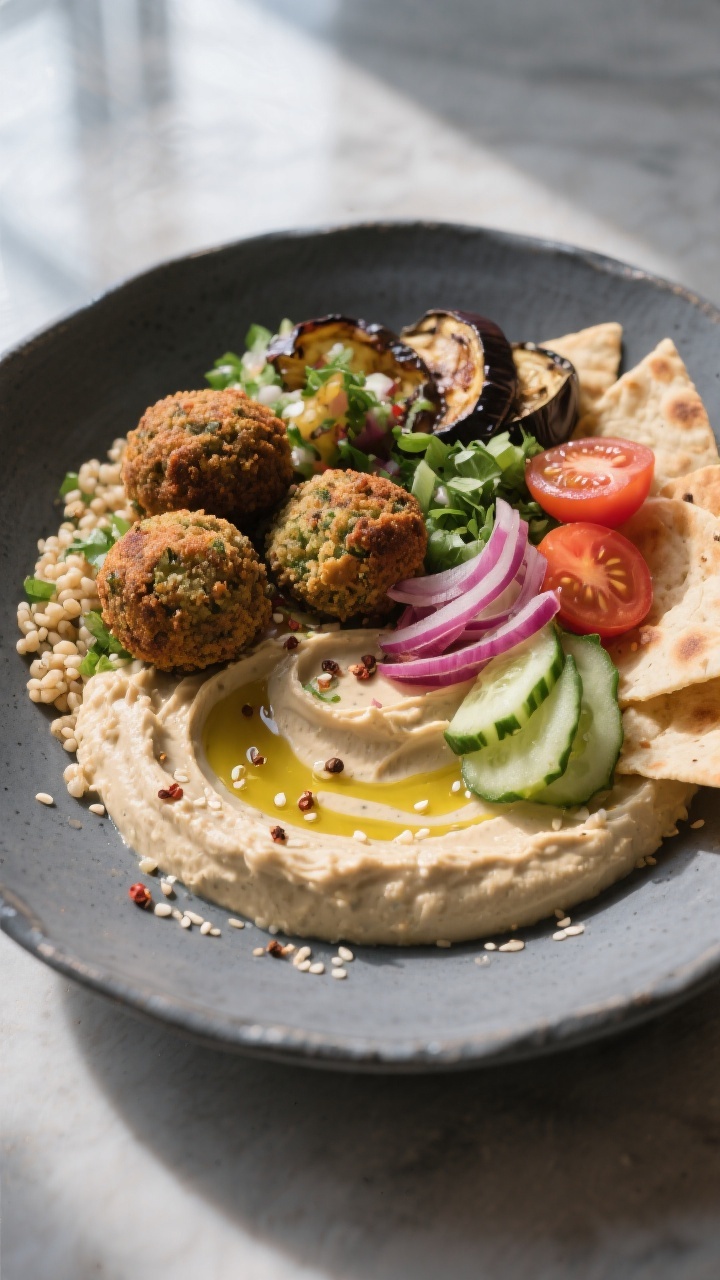
- Assemble the bowls. Spoon a generous swirl of hummus into each bowl. Add a scoop of grains, nestle in 3–4 falafel, and pile on the veggies and herbs. Drizzle with tahini dressing and finish with lemon wedges.
- Finish and serve. Add any extras like olives or feta.
Taste and adjust salt, lemon, and dressing as needed. Serve warm falafel over cool hummus for the best contrast.
Storage Instructions
- Falafel: Refrigerate up to 4 days in an airtight container. Reheat in a skillet or air fryer to re-crisp.
Freeze cooked falafel up to 2 months; reheat from frozen at 375°F (190°C) until hot.
- Hummus: Keeps 5–7 days in the fridge. Stir and thin with a splash of water or lemon if it thickens.
- Tahini Dressing: Refrigerate up to 1 week. It may thicken; add warm water and whisk.
- Veggies and Grains: Store separately in containers for 3–4 days.
Assemble bowls just before eating to keep textures fresh.
Benefits of This Recipe
- High in plant protein and fiber. Chickpeas, tahini, and whole grains keep you full and energized.
- Meal prep friendly. Batch the falafel and hummus for easy lunches all week.
- Budget-conscious. Canned chickpeas, simple spices, and basic produce create a wholesome, affordable meal.
- Customizable. Swap grains, mix up veggies, and adjust seasoning to your taste.
- Diet-flexible. Naturally vegetarian and easy to make vegan and gluten-free.
Pitfalls to Watch Out For
- Mushy falafel. If the mixture is too wet, they’ll fall apart. Dry your chickpeas well and add more breadcrumbs until the mix holds when pressed.
- Bland flavor. Under-seasoning is common. Taste and adjust salt, lemon, and spices before cooking.
- Dry hummus. Add cold water, a little at a time, until it’s silky.
Don’t be shy with lemon and tahini.
- Overcrowded pan. Give falafel space so they crisp. Work in batches if needed.
- Uneven textures. Balance crunchy veggies, creamy hummus, and warm falafel for the best bite.
Variations You Can Try
- Green Goddess Bowl: Add avocado, steamed broccoli, and extra herbs; swap tahini dressing for a lemon-herb yogurt sauce.
- Spicy Harissa: Mix 1–2 teaspoons harissa paste into the hummus or drizzle; add pickled chilies.
- Mediterranean Mezze: Add roasted eggplant, tabbouleh, olives, and pita chips for crunch.
- Grain-Free: Serve over a bed of chopped romaine and shredded cabbage instead of grains.
- Gluten-Free: Use certified GF breadcrumbs or oat flour in the falafel.
- Protein Boost: Add crispy roasted chickpeas or a spoon of hemp seeds on top.
FAQ
Can I use dried chickpeas instead of canned?
Yes. Soak 1 cup dried chickpeas overnight, then drain and pat dry.
Use them raw (not cooked) in the falafel mixture for a more traditional texture. You’ll likely need less binder because the mix will be drier and starchier.
How do I keep falafel from falling apart?
Dry the chickpeas well, pulse instead of pureeing, and chill the shaped falafel before cooking. Add breadcrumbs or oat flour until the mixture holds together when pressed.
Avoid flipping too early; let a crust form first.
Is there a shortcut for the hummus?
Absolutely. Use your favorite store-bought hummus and loosen with a splash of lemon juice and olive oil. Season with a pinch of salt and smoked paprika for a homemade feel.
What’s the best oil for cooking falafel?
Olive oil works well for pan-frying at medium heat.
For deeper frying, use a neutral high-heat oil like avocado or grapeseed to keep flavors clean and crisp.
Can I bake falafel and still get them crispy?
Yes. Use a hot oven, preheat your sheet pan, brush both the pan and falafel with oil, and flip halfway. For extra crunch, finish under the broiler for 1–2 minutes, watching closely.
How can I make this spicier?
Add cayenne or red pepper flakes to the falafel mix, or serve with a drizzle of harissa or sriracha.
A pinch of Aleppo pepper on top also adds mild heat and a fruity kick.
What can I use instead of tahini?
Try almond butter, cashew butter, or even sunflower seed butter for a nut-free option. Thin with warm water and lemon until creamy, and season with salt and garlic.
How long do assembled bowls last?
If you assemble with hummus and dressing, they’re best within 24 hours to keep the grains from softening. For meal prep, store components separately and assemble just before eating.
Final Thoughts
Falafel bowls with hummus bring together everything that makes a great meal: texture, color, and bold flavor.
With a few pantry staples and fresh produce, you can build a bowl that tastes restaurant-worthy at home. Once you learn the base method, you can mix and match ingredients to fit your mood or what’s in your fridge. Keep it simple, season boldly, and don’t skip the lemon.
This is the kind of feel-good food you’ll want on repeat.

Falafel Bowls With Hummus – A Fresh, Satisfying Meal
Ingredients
- For the Falafel: 2 cans (15 oz each) chickpeas, drained and patted dry
- 1 small onion, roughly chopped
- 3 cloves garlic
- 1 cup fresh parsley leaves (packed)
- 1/2 cup fresh cilantro leaves (packed, optional but great)
- 1 teaspoon ground cumin
- 1 teaspoon ground coriander
- 1/2 teaspoon smoked paprika (optional)
- 1 teaspoon baking powder
- 1/2–3/4 cup breadcrumbs or oat flour (as needed for texture)
- 1 teaspoon kosher salt, plus more to taste
- Black pepper to taste
- Olive oil for pan-frying or baking
- For the Hummus: 1 can (15 oz) chickpeas, drained
- 1/4 cup tahini
- 2 tablespoons lemon juice (more to taste)
- 1 small garlic clove
- 2–4 tablespoons cold water
- 2 tablespoons olive oil
- 1/2 teaspoon kosher salt
- For the Tahini Dressing: 1/4 cup tahini
- 2 tablespoons lemon juice
- 1 tablespoon maple syrup or honey
- 1 small garlic clove, grated
- 2–4 tablespoons warm water to thin
- Pinch of salt
- Bowl Components: 2 cups cooked grains (rice, quinoa, bulgur, or couscous)
- 1–2 cups chopped cucumbers
- 1–2 cups cherry tomatoes, halved
- 1/2 small red onion, thinly sliced
- 1 cup shredded carrots or thinly sliced radishes
- 1/2 cup chopped fresh parsley or mint
- Lemon wedges
- Optional extras: olives, pickled red onions, feta (if not vegan), pita chips
Instructions
- Prep the grains. Cook your chosen grain according to package directions. Fluff and set aside. A simple drizzle of olive oil and pinch of salt keeps them tasty.
- Make the hummus. In a food processor, blend chickpeas, tahini, lemon juice, garlic, salt, and olive oil. Add cold water 1 tablespoon at a time until smooth and creamy. Adjust lemon and salt to taste.
- Pulse the falafel mixture. To the same processor (no need to wash fully), add drained chickpeas, onion, garlic, parsley, cilantro, cumin, coriander, paprika, salt, and pepper. Pulse until finely chopped but not pureed; you want a coarse, sticky mixture.
- Add binder. Sprinkle in baking powder and 1/2 cup breadcrumbs or oat flour. Pulse to combine. If the mix still feels wet, add more crumbs 1 tablespoon at a time until it holds together when pressed.
- Shape the falafel. Scoop and roll into walnut-sized balls or small patties. Place on a tray and chill 15–20 minutes to firm up. This helps them cook without falling apart.
- Cook the falafel. Pan-fry: Heat a slick of olive oil in a nonstick skillet over medium heat. Cook falafel 3–4 minutes per side until deeply golden and crisp.
- Bake: Brush a sheet pan with oil. Arrange falafel, drizzle lightly, and bake at 425°F (220°C) for 18–22 minutes, flipping halfway.
- Air-fry: Spray basket, air-fry at 380°F (193°C) for 10–12 minutes, shaking once.
- Whisk the tahini dressing. In a small bowl, whisk tahini, lemon, maple syrup, garlic, salt, and water until smooth and pourable. It should coat a spoon but still drizzle.
- Prep the veggies. Chop cucumbers and tomatoes, slice onion, and shred carrots. Toss with a pinch of salt and a squeeze of lemon for quick brightness.
- Assemble the bowls. Spoon a generous swirl of hummus into each bowl. Add a scoop of grains, nestle in 3–4 falafel, and pile on the veggies and herbs. Drizzle with tahini dressing and finish with lemon wedges.
- Finish and serve. Add any extras like olives or feta. Taste and adjust salt, lemon, and dressing as needed. Serve warm falafel over cool hummus for the best contrast.