
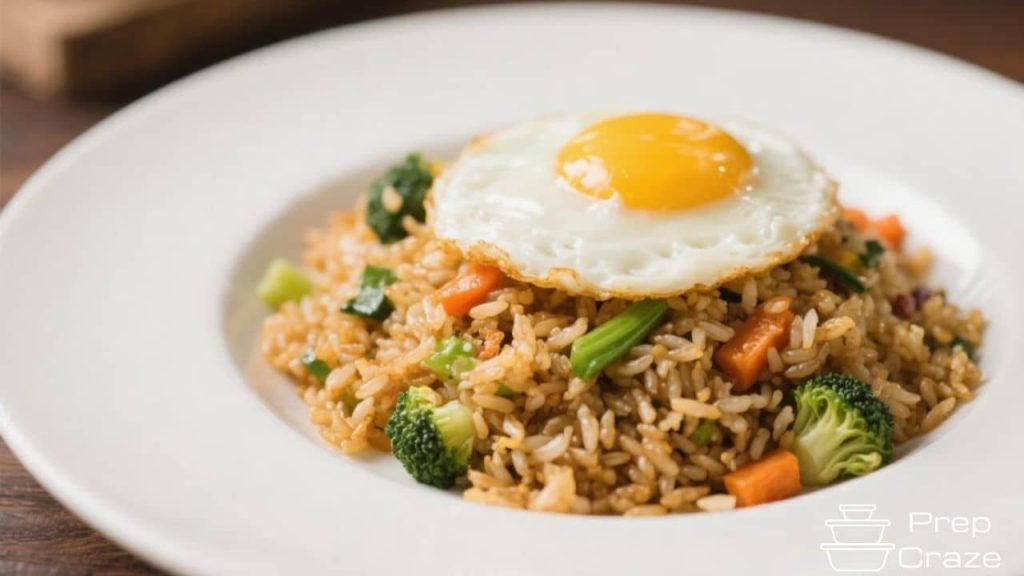
Fried rice is the kind of meal you can count on when time is tight and the fridge is half empty. It’s fast, flexible, and unbelievably satisfying. This veggie version keeps things light while still delivering that cozy, savory flavor you crave.
The egg adds protein and richness, and the vegetables bring color and crunch. It’s the perfect use for leftover rice, and you can easily scale it for a crowd or make a single-pan lunch.
What Makes This Special
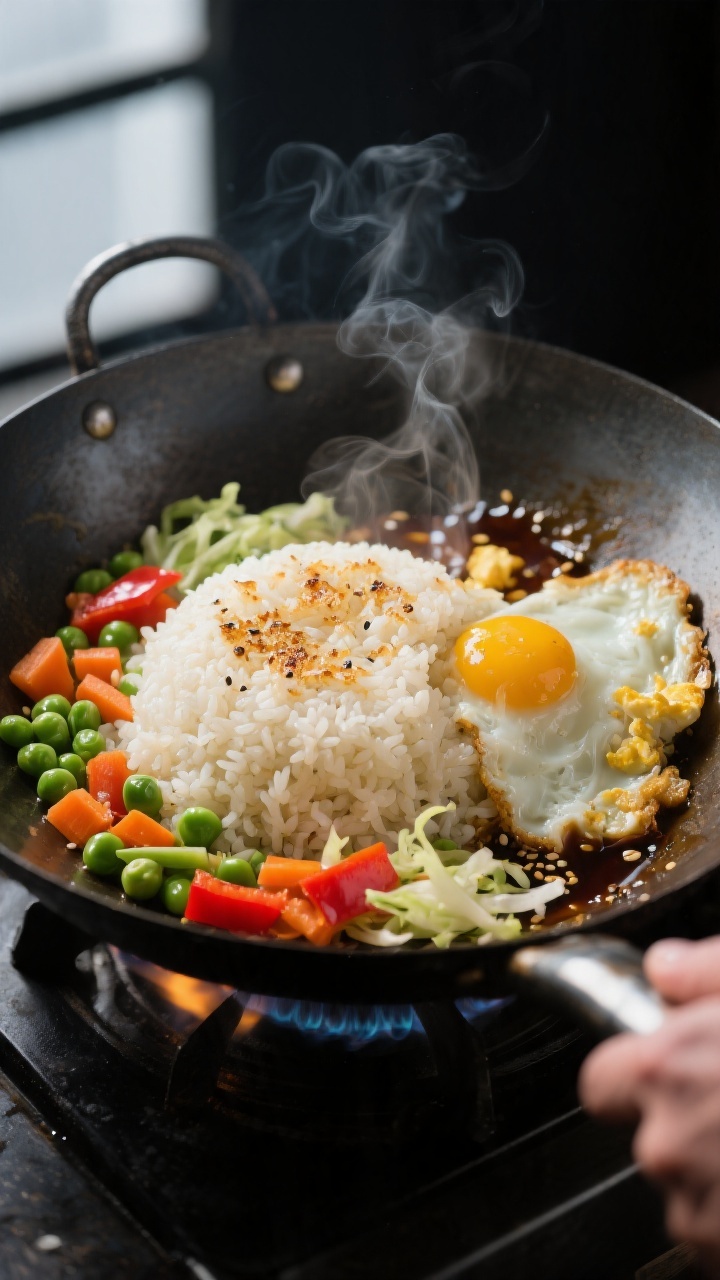
This recipe leans on simple ingredients and smart technique to create big flavor with minimal fuss. By using day-old rice, you get grains that fry up crisp instead of turning mushy.
A quick scramble of eggs brings creaminess and protein without weighing the dish down. A mix of vegetables keeps it bright and satisfying. Best of all, the sauce uses pantry staples you probably already have.
Shopping List
- Cooked day-old rice (3 to 4 cups; jasmine or long-grain preferred)
- Eggs (2 to 3 large)
- Neutral oil (canola, vegetable, or peanut)
- Sesame oil (to finish)
- Soy sauce (regular or low-sodium)
- Oyster sauce or vegetarian stir-fry sauce (optional but adds depth)
- Garlic (2 to 3 cloves, minced)
- Ginger (1-inch piece, minced; or 1 teaspoon ground)
- Scallions/green onions (4 to 5, sliced)
- Frozen peas and carrots (about 1 cup) or any chopped mixed veggies
- Bell pepper (1 small, diced)
- Cabbage (1 cup, shredded) or baby spinach (2 cups)
- Rice vinegar or lime (a splash, to brighten)
- White pepper or black pepper
- Optional add-ins: corn, edamame, mushrooms, broccoli, chili flakes, sriracha
How to Make It
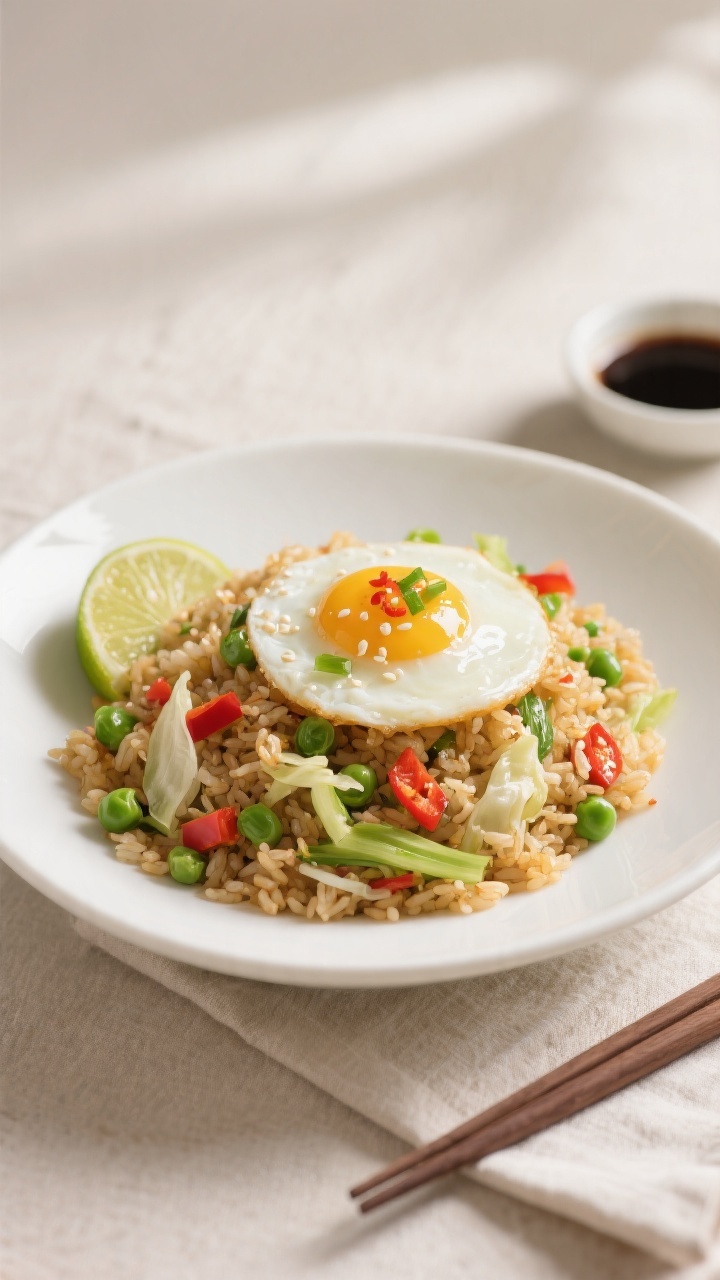
- Prep your rice. If you cooked it today, spread it on a tray and chill it for 30 minutes to dry slightly.
Cold, day-old rice separates into fluffy grains and fries better.
- Whisk the eggs. Beat 2 to 3 eggs with a pinch of salt and a splash of soy sauce. This seasons the eggs so they don’t taste bland.
- Mix the sauce. In a small bowl, combine 1½ to 2 tablespoons soy sauce, 1 teaspoon oyster sauce (optional), a pinch of white or black pepper, and ½ teaspoon sesame oil. Adjust to taste.
- Heat the pan properly. Set a large skillet or wok over medium-high heat.
Add 1 tablespoon neutral oil and swirl to coat. A hot pan is key for slight char and smoky flavor.
- Scramble the eggs. Pour in the eggs and scramble just until set but still soft. Slide them to a plate.
They’ll finish cooking later in the rice.
- Sauté aromatics. Add another 1 tablespoon oil. Toss in minced garlic and ginger, stirring for 20 to 30 seconds until fragrant. Don’t brown them.
- Cook the veggies. Add carrots, bell pepper, and any firm vegetables.
Stir-fry 2 to 3 minutes. Add quick-cooking veggies like peas, scallions (white parts), and cabbage or spinach last. Cook until crisp-tender.
- Add the rice. Break up clumps with your fingers or a spatula.
Spread the rice in the pan, pressing it into a thin layer. Let it sit for 30 to 60 seconds so it can sear lightly, then toss. Repeat once or twice for texture.
- Season. Pour in the sauce around the edges of the pan so it sizzles.
Toss well to coat every grain. Add the scrambled eggs back, breaking them into small pieces.
- Finish and taste. Add a splash of rice vinegar or a squeeze of lime for brightness, the green parts of the scallions, and a drizzle of sesame oil. Taste and adjust with more soy sauce, pepper, or a pinch of sugar if needed.
- Serve hot. Top with extra scallions or chili flakes if you like heat.
Eat straight from the pan while it’s sizzling and fragrant.
Keeping It Fresh
Let the fried rice cool slightly, then store it in an airtight container for up to 4 days. If making ahead, keep the rice, veggies, and eggs separate, then combine and fry right before serving. To reheat, use a hot pan with a teaspoon of oil and splash in a little water to steam and revive the grains.
The microwave works in a pinch; cover loosely and stir halfway for even heating.
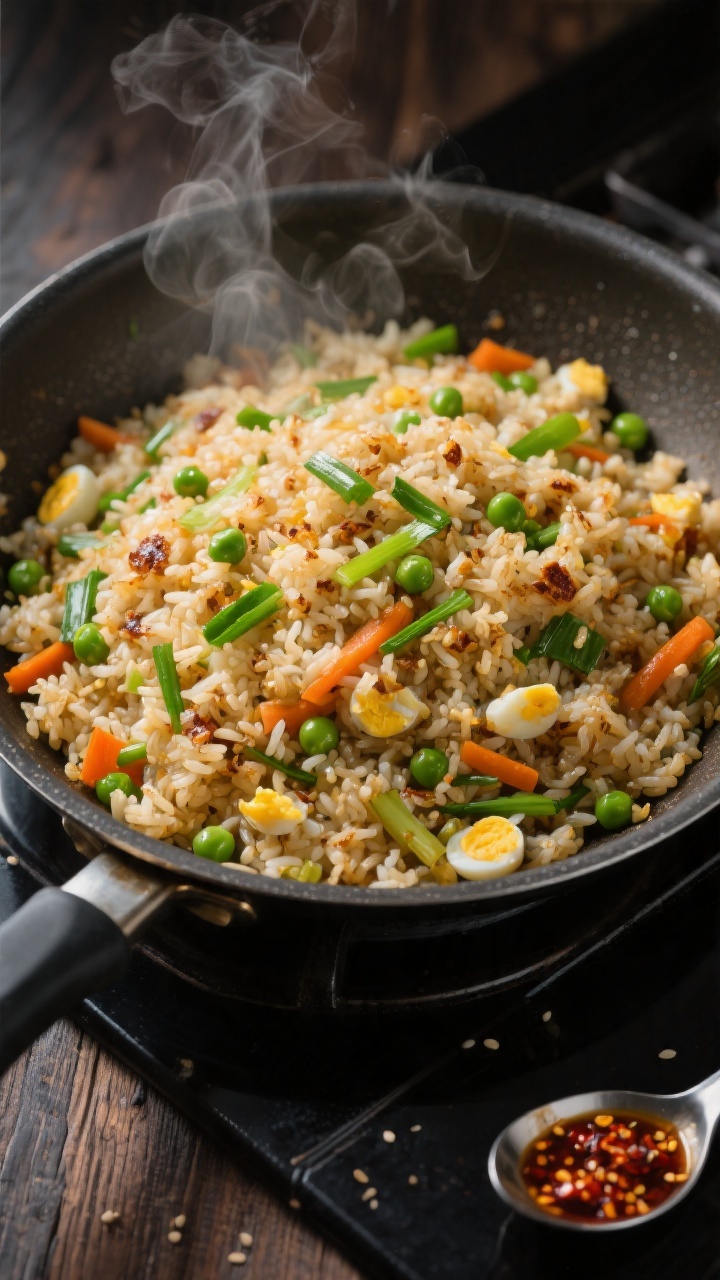
Why This is Good for You
This meal balances complex carbs, protein, and fiber in one bowl. The veggies contribute vitamins, minerals, and antioxidants while adding volume for a more filling plate. Eggs supply high-quality protein and nutrients like choline and B vitamins.
By controlling the oil and sodium yourself, you get all the comfort of takeout with a lighter, cleaner profile.
Pitfalls to Watch Out For
- Wet rice = soggy results. Use day-old or chilled rice with dry, separate grains.
- Overcrowding the pan. Too much in the pan traps steam. Cook in batches if needed.
- Low heat. A hot pan builds flavor and keeps veggies crisp. Preheat thoroughly.
- Seasoning at the end only. Lightly season eggs and veggies along the way, then finish with sauce.
- Skipping acidity. A splash of vinegar or lime makes the dish pop and balances saltiness.
Recipe Variations
- Garlic-Chili Kick: Add chili crisp or red pepper flakes with the aromatics.
Finish with a little extra sesame oil.
- Mushroom Umami: Sauté sliced shiitakes or creminis first until browned, then continue with the recipe.
- Green Goodness: Use edamame, peas, zucchini, broccoli, and lots of scallions. Finish with fresh cilantro.
- Pineapple Twist: Stir in small pineapple chunks near the end for sweet-savory contrast.
- No-Soy Option: Swap soy sauce for coconut aminos and use a vegetarian oyster-style sauce or skip it.
- Extra Protein: Add tofu cubes (pan-seared), tempeh, or a handful of cooked shrimp or chicken if you want a hybrid version.
- Brown Rice or Quinoa: Works well if fully cooled; expect a slightly chewier texture.
FAQ
Can I use freshly cooked rice?
Yes, but spread it on a baking sheet to cool quickly, then chill for at least 30 minutes. This helps dry the surface so it fries instead of steaming.
What’s the best oil for fried rice?
Use a neutral, high-heat oil like canola, vegetable, or peanut.
Save sesame oil for finishing since it can burn if heated too long.
Do I need a wok?
No. A large nonstick or stainless-steel skillet works. The key is high heat, enough room to toss, and not overcrowding the pan.
How do I keep the eggs tender?
Cook them separately until just set, remove from the pan, and fold them back in at the end.
This prevents rubbery, overcooked pieces.
Is oyster sauce necessary?
It’s optional but adds savory depth. If you’re vegetarian or avoiding shellfish, use a mushroom-based vegetarian stir-fry sauce or add a bit more soy plus a pinch of sugar.
How can I make it gluten-free?
Use certified gluten-free soy sauce or tamari, and ensure any add-in sauces are labeled gluten-free. The rest of the ingredients are naturally gluten-free.
What vegetables work best?
Sturdy, quick-cooking vegetables are ideal: peas, carrots, bell peppers, corn, edamame, cabbage, spinach, broccoli florets, and mushrooms.
Cut them small so they cook fast and stay crisp.
How do I avoid bland fried rice?
Season in layers. Salt the eggs lightly, sauté aromatics until fragrant, use a balanced sauce, and finish with acidity and sesame oil. Taste and adjust before serving.
Can I freeze veggie fried rice?
Yes.
Cool completely, then freeze in flat portions for up to 2 months. Reheat in a hot pan with a splash of water and a touch of oil to bring back the texture.
What’s the ideal rice-to-sauce ratio?
For 3 to 4 cups of rice, start with about 1½ to 2 tablespoons soy sauce, 1 teaspoon oyster sauce, and ½ teaspoon sesame oil, then adjust to taste. Add a splash of vinegar or lime at the end.
In Conclusion
Veggie Fried Rice with Egg is quick, flexible, and comforting, with just the right mix of color, texture, and savory flavor.
Use what you have, keep the heat high, and don’t skip the little finishing touches that make it shine. With a bit of planning for the rice and a hot pan, you’ll have a better-than-takeout bowl on the table in minutes. It’s the weeknight hero you’ll come back to again and again.
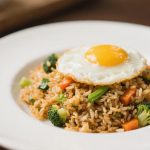
Veggie Fried Rice With Egg – A Quick, Comforting Weeknight Meal
Ingredients
- Cooked day-old rice (3 to 4 cups; jasmine or long-grain preferred)
- Eggs (2 to 3 large)
- Neutral oil (canola, vegetable, or peanut)
- Sesame oil (to finish)
- Soy sauce (regular or low-sodium)
- Oyster sauce or vegetarian stir-fry sauce (optional but adds depth)
- Garlic (2 to 3 cloves, minced)
- Ginger (1-inch piece, minced; or 1 teaspoon ground)
- Scallions/green onions (4 to 5, sliced)
- Frozen peas and carrots (about 1 cup) or any chopped mixed veggies
- Bell pepper (1 small, diced)
- Cabbage (1 cup, shredded) or baby spinach (2 cups)
- Rice vinegar or lime (a splash, to brighten)
- White pepper or black pepper
- Optional add-ins: corn, edamame, mushrooms, broccoli, chili flakes, sriracha
Instructions
- Prep your rice. If you cooked it today, spread it on a tray and chill it for 30 minutes to dry slightly. Cold, day-old rice separates into fluffy grains and fries better.
- Whisk the eggs. Beat 2 to 3 eggs with a pinch of salt and a splash of soy sauce. This seasons the eggs so they don’t taste bland.
- Mix the sauce. In a small bowl, combine 1½ to 2 tablespoons soy sauce, 1 teaspoon oyster sauce (optional), a pinch of white or black pepper, and ½ teaspoon sesame oil. Adjust to taste.
- Heat the pan properly. Set a large skillet or wok over medium-high heat. Add 1 tablespoon neutral oil and swirl to coat. A hot pan is key for slight char and smoky flavor.
- Scramble the eggs. Pour in the eggs and scramble just until set but still soft. Slide them to a plate. They’ll finish cooking later in the rice.
- Sauté aromatics. Add another 1 tablespoon oil. Toss in minced garlic and ginger, stirring for 20 to 30 seconds until fragrant. Don’t brown them.
- Cook the veggies. Add carrots, bell pepper, and any firm vegetables. Stir-fry 2 to 3 minutes. Add quick-cooking veggies like peas, scallions (white parts), and cabbage or spinach last. Cook until crisp-tender.
- Add the rice. Break up clumps with your fingers or a spatula. Spread the rice in the pan, pressing it into a thin layer. Let it sit for 30 to 60 seconds so it can sear lightly, then toss. Repeat once or twice for texture.
- Season. Pour in the sauce around the edges of the pan so it sizzles. Toss well to coat every grain. Add the scrambled eggs back, breaking them into small pieces.
- Finish and taste. Add a splash of rice vinegar or a squeeze of lime for brightness, the green parts of the scallions, and a drizzle of sesame oil. Taste and adjust with more soy sauce, pepper, or a pinch of sugar if needed.
- Serve hot. Top with extra scallions or chili flakes if you like heat. Eat straight from the pan while it’s sizzling and fragrant.


